Sites Overview
Ace Intl Media operates multiple websites and domains, each designed to perform a specific role within the wider digital ecosystem. These sites are intentionally separated to ensure clarity, security, and operational control across all environments.
Rather than combining public content, client systems, applications, and internal tooling into a single environment, each site is purpose-built for its function. This architectural separation reduces operational risk, limits system coupling, and prevents cross-impact between unrelated services. It also enables each site to scale, evolve, and be maintained independently without introducing instability across the wider platform ecosystem.
Public Websites
Public websites are designed for visibility, communication, and discovery. These sites present Ace Intl Media’s services, positioning, and brand identity without exposing operational systems or client data.
They are intentionally separated from billing systems, project tools, and internal platforms to ensure stability, performance, and security. This separation allows public-facing content to scale independently while maintaining consistent uptime and fast load performance under traffic growth. It also ensures that marketing, content updates, and SEO activity never interfere with client operations or internal system integrity.

Client & Portal Sites
Client and portal sites provide authenticated access to services, billing, domains, hosting, and support. These environments act as the operational interface between Ace Intl Media and its clients.
Access is role-based, secured, and audited, with no public interaction or marketing content hosted within these systems.

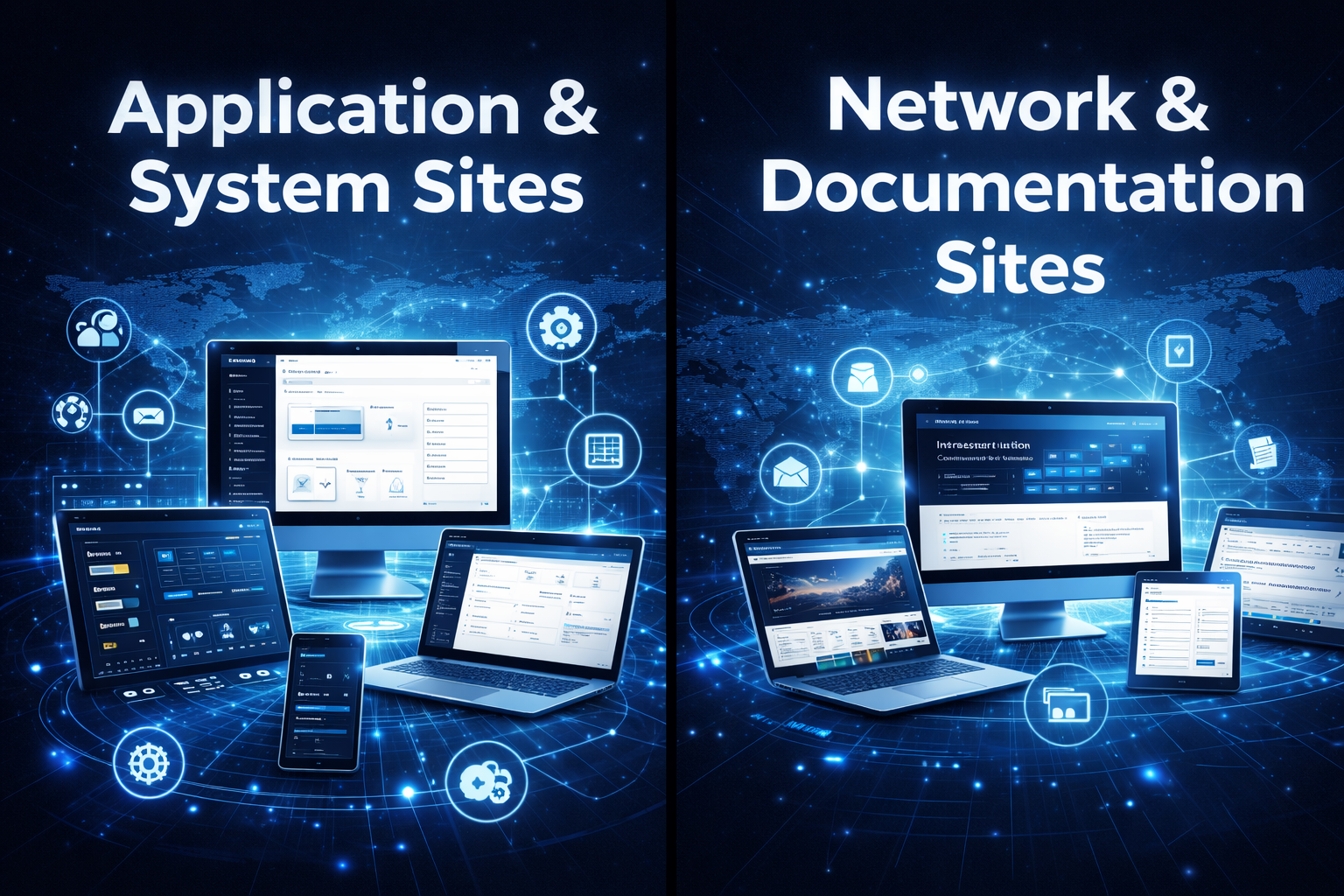
Application & System Sites
Application and system sites host internal tools, dashboards, automation interfaces, and bespoke software environments. These sites are built to support functionality rather than presentation.
They integrate with infrastructure services while remaining isolated from public websites and client portals.

Network & Documentation Sites
Network and documentation sites provide transparency into how systems are designed, structured, and operated. Their role is informational, not transactional.
These sites support clarity, accountability, and long-term technical continuity without exposing sensitive controls or credentials.