
Infrastructure Doctrine Framework

A governed, documentation-grade system for architecture, continuity, recovery, and operational survivability.

ACE INTL MEDIA — INFRASTRUCTURE DOCTRINE FRAMEWORK

The Infrastructure Doctrine Framework defines how Ace Intl Media designs, documents, governs, and operates digital systems over time.

It establishes a shared model for architectural intent, operational clarity, and long-term survivability across all systems delivered and managed by Ace Intl Media.

This framework expands the core doctrine into a complete, documentation-grade structure that supports onboarding, internal governance, continuity planning, audits, and controlled system evolution.

It applies to all infrastructure, platforms, and operational surfaces documented across the Ace Intl Media Network, ensuring that systems remain explainable, recoverable, and accountable as they scale and change.

1. Doctrine (Core Principle)

Silent failure is the loss of legibility, not the loss of function.

This principle governs every architectural, operational, and recovery decision made under the framework.

The doctrine serves as the constitutional anchor for:

Any system that cannot explain itself is considered degraded, regardless of apparent uptime.

2. Architecture Standard

The Architecture Standard defines how systems documented on the platform layer must be designed to remain understandable and governable over time.

2.1 Architectural Boundaries

Every system must have explicit boundaries, named ownership, and documented intent.

2.2 Narrative Integrity

Architecture must preserve the story of the system — why it exists, how it evolved, and what it is expected to survive.

2.3 Intent-First Design

Code, tooling, and automation follow documented intent, not convenience or vendor defaults.

2.4 Anti-Fragility Requirements

Systems must degrade visibly and predictably. Silent degradation is treated as a design failure.

2.5 Documentation as Infrastructure

Documentation is a structural component of the system, not a supporting artifact.

3. Continuity Standard

The Continuity Standard governs how systems remain explainable, recoverable, and operable over time, as detailed in Continuity & Recovery.

3.1 Ownership Model

No system exists without a named steward responsible for clarity and survivability.

3.2 Recovery Guarantees

Recovery must be possible without guesswork, undocumented dependencies, or tribal knowledge.

3.3 Change Governance

All changes must preserve narrative integrity and documented intent.

3.4 Drift Detection

The framework defines how divergence between documentation, architecture, and reality is detected.

3.5 Survivability Metrics

Metrics measure clarity and explainability, not just uptime.

4. Recovery Standard

The Recovery Standard defines how systems are restored when architectural clarity collapses.

4.1 Recovery Philosophy

Recovery prioritizes restoration of understanding before restoration of service.

4.2 Recovery Playbooks

Step-by-step procedures for restoring narrative integrity.

4.3 Evidence Requirements

Evidence captured during recovery becomes part of the permanent architectural record.

4.4 Post-Recovery Architecture Review

Recovery events trigger architectural review to prevent recurrence.

5. Operator’s Handbook

The Operator’s Handbook defines how systems are read, modified, and escalated by operators using the Ace Intl Media Portal .

5.1 How to Read the System

Operators are trained to reason structurally, not procedurally.

5.2 How to Document Changes

Every change requires a minimum viable narrative.

5.3 How to Detect Silent Failure

Operators are trained to detect erosion of clarity.

5.4 How to Escalate

Structural risk is escalated before technical failure occurs.

6. Client Governance Standard

The Client Governance Standard defines expectations for clients interacting with governed systems via the client portal .

6.1 What Clients Are Entering

A governed ecosystem, not a commodity service.

6.2 Client Responsibilities

Clients must respect architectural boundaries.

6.3 Change Requests

Changes are evaluated against survivability, not urgency.

6.4 Continuity Guarantees

Guarantees are explicit and documented.

7. Contributor & Contractor Standard

This standard governs certification, access, oversight, and offboarding for contributors.

7.1 Certification Requirements

Contributors must demonstrate architectural understanding.

7.2 Access Control

Access is granted by necessity, not convenience.

7.3 Oversight & Audit

All contributor work is auditable.

7.4 Offboarding Protocol

Access removal preserves narrative integrity.

8. Platform & Portal Integration

Doctrine is enforced operationally through the platform layer and exposed via the operations portal .

8.1 Portal as Governance Layer

The portal is a control surface, not a dashboard.

8.2 Access & Identity

Identity is tied directly to accountability.

8.3 Change Records

The portal is the single source of truth.

8.4 Recovery Surfaces

Recovery state is visible and auditable.

9. Public-Facing Doctrine Summary

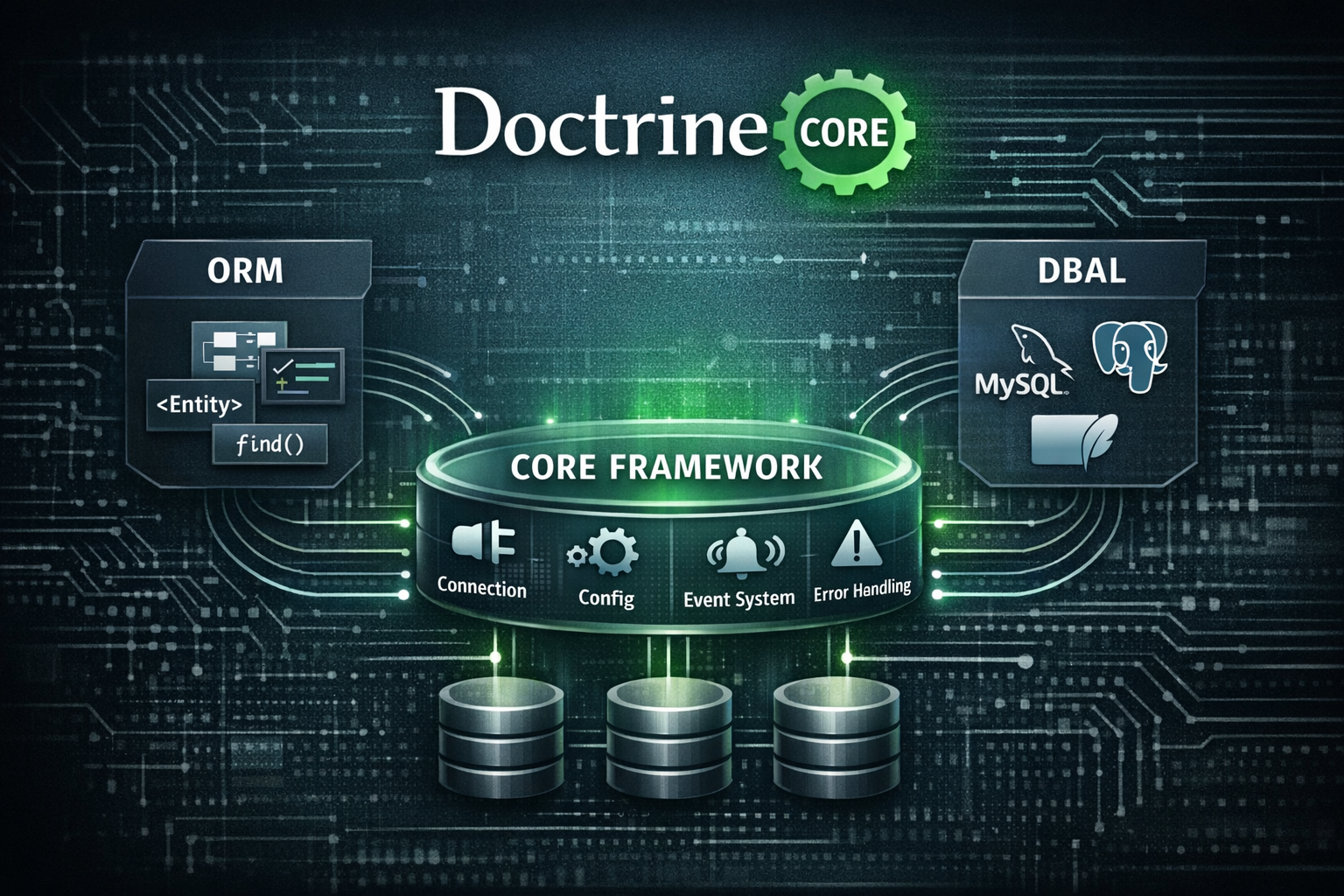
Doctrine Core architecture illustrating ORM, DBAL, and core framework components

This summary presents the outward-facing intent of the doctrine, describing principles and structure without reference to internal processes or operational detail.

Frequently Asked Questions

What is the Infrastructure Doctrine Framework?

The Infrastructure Doctrine Framework is a governed system that defines how Ace Intl Media designs, documents, operates, and recovers digital infrastructure over time. It prioritizes clarity, accountability, and long-term survivability over short-term delivery.

How is this different from normal technical documentation?

Traditional documentation explains how systems work. This framework explains how systems must remain understandable, recoverable, and governed as they evolve. Documentation is treated as infrastructure, not supporting material.

Is this framework client-facing or internal?

Both. Certain sections are public-facing to set expectations, while deeper standards and analyst versions are internal and used for operations, audits, and governance.

Does this framework replace monitoring and observability tools?

No. Monitoring tools measure system behaviour. The framework governs system understanding. Both are required, but they solve different problems.

Who is responsible for maintaining compliance with the framework?

Every system defined under the framework has a named steward. Responsibility is architectural, not individual — ownership is explicit and documented.

How does this framework handle change?

All changes must preserve narrative integrity. The framework requires that intent, impact, and recovery considerations are documented before and after changes occur.

What happens when a system fails silently?

Silent failure triggers recovery of understanding first, not just service restoration. The goal is to restore clarity, accountability, and explainability before resuming normal operation.

How does this framework relate to the client portal?

The portal is treated as a governance surface, not just a dashboard. It exposes access control, change records, recovery states, and accountability boundaries defined by the framework.

Can this framework be audited?

Yes. The framework is designed to support internal audits, incident reviews, and external governance checks by preserving architectural intent and decision history.

Is this framework fixed or evolving?

The doctrine is stable, but standards evolve. Changes are governed, versioned, and documented to prevent erosion of clarity over time.